
AMC and Ministry of Urban Development and Housing Hold Successful Design Review Meeting
The Afghan Medical Complex (AMC), a flagship healthcare project of Atta Welfare Foundation (AWF), has successfully concluded an important technical design review meeting with the Ministry of Urban De…
AMC
Author
August 25, 2026
Published
5 min read
Reading time
Article Summary
Strengthening Coordination Between Government and Technical Experts
The Afghan Medical Complex (AMC), developed by Atta Welfare Foundation (AWF), continues to make encouraging progress toward establishing Afghanistan's first purpose-built multi-oncology hospital.
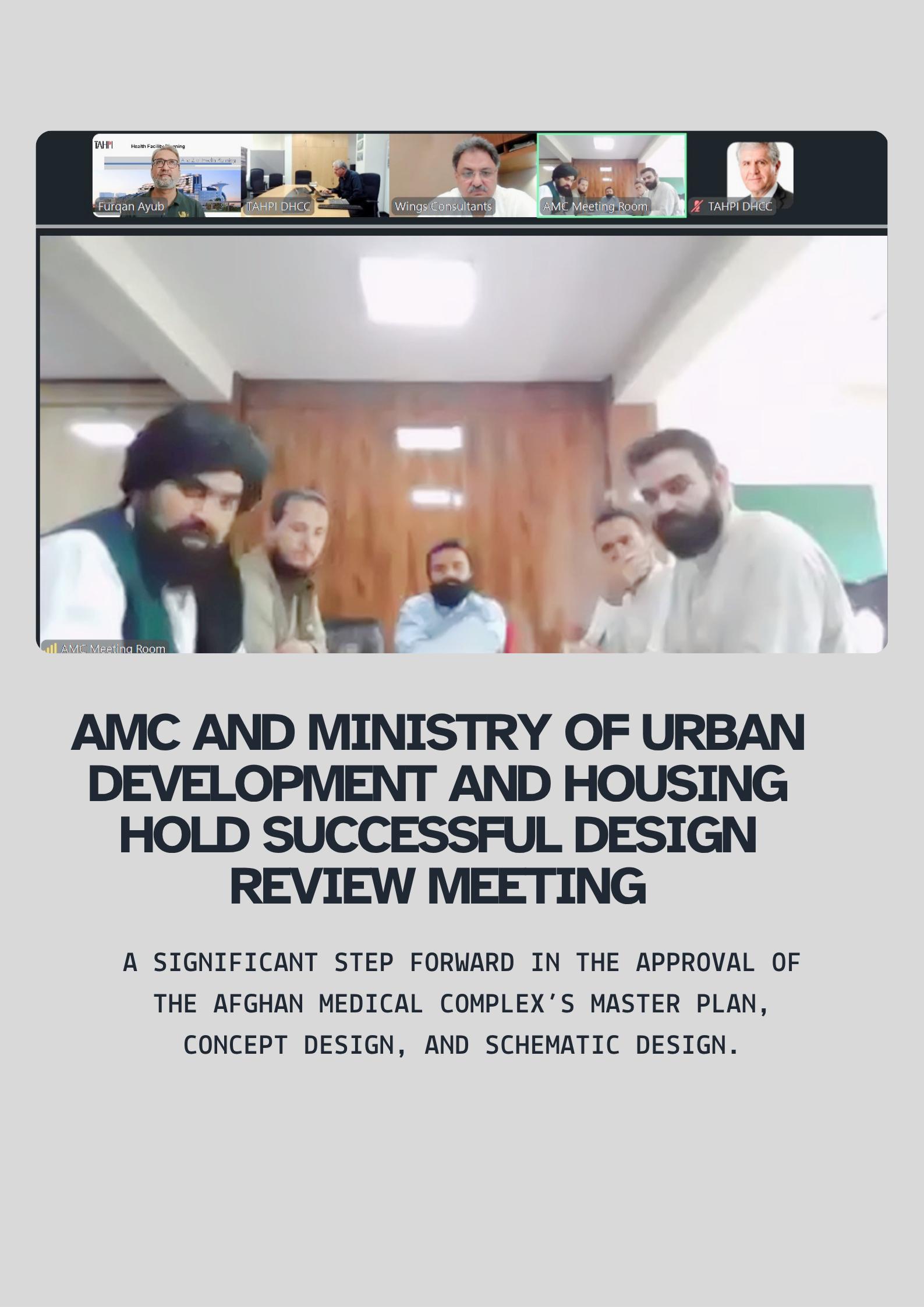
The meeting brought together representatives from the Ministry, AMC and AWF leadership, the architectural and engineering design consultant, and the independent technical reviewer.
The meeting reflected the importance of close cooperation between government authorities, project leadership, architects, engineers, and healthcare planning specialists in developing a complex medical facility.
Participation of Government and Project Stakeholders
The meeting was attended by representatives of the organisations responsible for the project's development, design, technical review, and regulatory coordination.
The Ministry's participation included its Head of Design and specialist architect Mr. Abdul Haseeb Bahrami, who contributed to the technical discussions and clarification of the Ministry's review comments.
As AMC's appointed architectural and engineering design consultant, Wings Consultants participated in addressing the comments and explaining the design considerations, spatial arrangements, and proposed technical solutions.
TAHPI participated as the project's independent technical reviewer, providing specialist healthcare planning expertise and technical input based on the International Health Facility Guidelines (IHFG).
Representatives from AWF and AMC participated in the meeting to ensure that the discussions remained aligned with the project's objectives, development requirements, and long-term operational vision.The participation of these organisations created a constructive platform for technical dialogue and coordinated decision-making.
Reviewing the Master Plan, Concept Design, and Schematic Design
The primary purpose of the meeting was to review and address the comments previously provided by MUDH on the submitted design documentation.
1. Site Development and Master Planning
The site development review considered the overall organisation of the hospital campus, including access, circulation, functional zoning, and the relationship between the proposed facilities.
2. Concept Design
The concept design discussions focused on the overall architectural approach, building organisation, and functional relationships between the hospital's clinical and supporting departments.
3. Schematic Design
The schematic design discussions examined the proposed spatial arrangements and the relationships between departments and supporting facilities.
These discussions helped establish a clearer understanding between the Ministry's representatives, Wings Consultants, TAHPI, and AMC regarding the design's technical direction.
Addressing Comments Through International Healthcare Guidelines
One of the most productive outcomes of the meeting was the detailed discussion of the Ministry's technical comments in relation to the International Health Facility Guidelines (IHFG).
Throughout the meeting, Wings Consultants presented the design considerations and proposed responses, while TAHPI contributed its specialist healthcare planning knowledge to support the technical discussions.
Following extensive discussion, all outstanding comments were addressed and resolved at the technical discussion level, while certain points were retained as recommendations for consideration during subsequent design stages.
It also reinforces AMC's commitment to developing a hospital that is technically appropriate, operationally efficient, and responsive to Afghanistan's healthcare needs.
Moving Toward Formal Design Approval
With the technical discussions concluded and the comments addressed, the project has reached another important point in its development.
This endorsement is an essential administrative milestone before the project can proceed to the next stage of architectural and engineering development.
During this phase, the architectural, structural, mechanical, electrical, and other engineering disciplines will progressively develop and coordinate the hospital design.
The progression represents an important step toward moving the project beyond its early design stages and into the more advanced stages of development.
Preparing for the Next Phase of AMC
For Atta Welfare Foundation and the Afghan Medical Complex team, the successful conclusion of this meeting is another encouraging milestone in a long journey.
Each completed review, resolved comment, and formal approval brings the project closer to its ultimate objective.
The hospital is being planned not only as a treatment facility but also as a long-term investment in healthcare capacity, professional development, and improved access to specialised medical services.
Appreciation and Acknowledgement
The Afghan Medical Complex and Atta Welfare Foundation extend their sincere appreciation to the Ministry of Urban Development and Housing, particularly its Head of Design, specialist architect Mr. Abdul Haseeb Bahrami, and the participating Ministry representatives, for arranging and facilitating this productive technical meeting.
The constructive participation of all parties demonstrates the importance of cooperation, professionalism, and shared responsibility in delivering a healthcare project of national significance.
Looking Ahead
With the Ministry's technical comments addressed, AMC now looks forward to receiving formal approval of the current design phase and progressing into design development.
Every milestone achieved is another step toward a future where Afghan cancer patients can receive free to affordable, high-quality treatment within their own country.